.jpg?width=50&name=inspiring-new-boss%20(1).jpg)
A practical guide for homeowners, landlords, contractors, and property managers keeping laundry rooms running smoothly.
A top load washer is supposed to make laundry simple. When it starts shaking, draining slowly, leaving clothes wet, smelling musty, or making noise, the problem can disrupt the whole household.
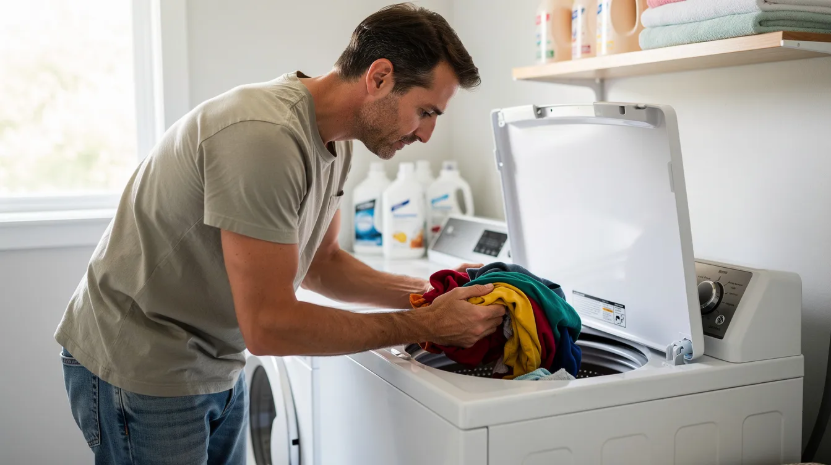
Some washer issues are basic maintenance problems. Others are signs that the appliance is overloaded, installed incorrectly, wearing out, or no longer worth repairing. The right next step depends on the symptom, the washer age, the cost of repair, and how heavily the laundry room is used.
This guide explains the most common top load washer problems, what homeowners can check safely, how to maintain the machine, and when it may be smarter to compare replacement washers at Varouj.
Safety note: Before cleaning around hoses, filters, or the washer body, turn the machine off and follow the owner's manual. If you smell burning, see sparks, have standing water near electrical connections, or suspect a gas dryer issue nearby, stop using the laundry area and call a qualified professional.
Helpful next step: Email Varouj sales with your washer size, laundry room layout, and project type. The team can help compare top load washers, laundry pairs, portable washers, and commercial laundry options before you shop online, request a quote, or visit the North Hollywood showroom.
Key Takeaways
- Many top load washer problems come from overloading, uneven floors, detergent buildup, clogged screens, kinked hoses, or poor maintenance.
- Unbalanced loads, slow draining, residue on clothes, odors, and loud spin cycles can often be reduced with better loading habits and routine cleaning.
- ENERGY STAR certified clothes washers use less measured energy and water than standard models, but savings depend on the model and household use.
- Los Angeles apartments, ADUs, rentals, and multifamily laundry rooms need durable washer choices and clear maintenance routines.
- If repair costs are high or the washer has repeated issues, replacement may be the more practical long-term choice.
- Pause the cycle and redistribute the load evenly around the tub.
- Avoid washing one heavy item by itself, such as a single bath mat or blanket.
- Check that all washer feet are touching the floor and the cabinet does not wobble.
- For apartments and upper-floor laundry rooms, pay close attention to vibration because it can travel through the structure.
- Try a smaller load and choose the correct cycle for the fabric.
- Check that the drain hose is not crushed behind the machine.
- Make sure the drain hose height matches the installation guide.
- Avoid using too much detergent, which can cause excess suds and poor rinsing.
- Confirm the drain hose is not kinked, pinched, or pushed too far into the standpipe.
- Look for lint, coins, small clothing items, or debris near accessible areas described in the manual.
- Do not force panels open or reach into hidden components unless the owner's manual specifically instructs it.
- If water will not empty or keeps returning, stop using the washer and schedule service.
- Run the washer's clean cycle if it has one.
- Use a washer cleaner approved by the manufacturer, or follow the cleaning method in the owner's manual.
- Clean removable dispensers and wipe around the lid and rim.
- Leave the lid open after washing so the tub can dry.
- Use the correct amount of HE detergent for the load size and soil level.
- Use HE detergent if the washer requires it.
- Measure detergent instead of pouring by habit.
- Load clothes loosely around the agitator or impeller.
- Do not cover the center of the wash plate or pack clothes above the recommended level.
- Choose a deeper-water or extra-rinse option only when the load actually needs it.
- Weekly: Wipe the lid, control area, and detergent spills.
- After each load: Leave the lid open long enough for the tub to dry.
- Monthly: Run a clean washer cycle or manufacturer-approved cleaning routine.
- Every few months: Check hoses for kinks, bulges, cracks, and tight bends.
- As needed: Clean removable dispensers and accessible lint or inlet screens according to the owner's manual.
- Project kitchens and rentals: Post simple washer-use rules to reduce overloading and detergent misuse.
- The washer has repeated drainage, spin, or vibration issues after service.
- Repair cost is high compared with the value of the appliance.
- The machine is too small for the household or rental use case.
- Water use, noise, or cycle performance is no longer acceptable.
- You are upgrading a laundry room, ADU, apartment, or multifamily property and want consistent appliances.
- Apartments and condos may need careful delivery planning, elevator coordination, and size checks.
- ADUs and small laundry closets may require compact washers or precise clearance planning.
- Multifamily buildings benefit from durable controls, consistent models, and clear tenant instructions.
- Older properties may need hose, drain, floor, and electrical checks before installation.
- Hard water and frequent use can make regular cleaning and dispenser maintenance more important.
- Maytag and Whirlpool for practical top load washer options shown in Varouj's live category.
- GE and other familiar appliance brands for household replacement projects.
- Commercial washers for shared laundry rooms, apartment buildings, and property managers.
- Portable washers for space-limited apartments or situations where a full laundry setup is not practical.
- Top load matching gas or electric dryers when the project needs a coordinated laundry pair.
- Top load washers: https://www.varouj.com/collections/top-load-washers
- Washers
- Laundry
- Front load washers
- Portable washers
- Commercial washers
- Laundry accessories
Common Top Load Washer Problems: Quick Troubleshooting Guide
|
Problem |
Likely Cause |
Safe First Check |
When to Get Help |
|
Washer shakes or walks |
Unbalanced load, uneven floor, poor leveling |
Redistribute laundry and check that the washer sits level |
If vibration continues after leveling |
|
Clothes come out too wet |
Drain issue, spin problem, overloaded tub |
Run a smaller load and check the drain hose for kinks |
If spin cycle fails or water remains |
|
Washer will not drain |
Kinked hose, clogged drain path, pump issue |
Check hose position and visible clogs |
If water will not empty safely |
|
Musty odor |
Detergent residue, closed lid, wet tub |
Run a washer-cleaning cycle and leave lid open after use |
If odor returns quickly |
|
Residue on clothes |
Too much detergent, wrong detergent, overloaded load |
Use less HE detergent and avoid packing the tub |
If residue continues across cycles |
|
Filling slowly |
Low water pressure, clogged inlet screens, hose issue |
Check that valves are fully open and hoses are not kinked |
If inlet screens or valves need service |
|
Loud grinding or banging |
Object in tub, worn component, unbalanced load |
Stop the cycle and check for loose items |
If noise continues when empty |
1. Washer Shakes, Rocks, or Walks During Spin
A top load washer that moves during the spin cycle is usually reacting to imbalance. Heavy towels, bedding, and mixed loads can bunch to one side of the tub. An uneven floor or washer that is not level can make the movement worse.
If the washer keeps shaking when loads are balanced and the machine is level, the issue may be mechanical and should be checked by a professional.
2. Clothes Come Out Too Wet
Wet clothes after a completed cycle usually point to a spin or drainage problem. The washer may be overloaded, the cycle may be wrong for the fabric, the drain hose may be kinked, or the machine may not be spinning at full speed.
3. Washer Will Not Drain
A washer that will not drain needs attention quickly, especially in condos, apartments, and multifamily laundry rooms where water damage can affect other units. Start with visible, non-invasive checks only.
4. Washer Smells Musty
Top load washers can develop odor when detergent residue, soil, and moisture remain in the tub or dispensers. This is common in busy households and shared laundry spaces.
5. Detergent Residue or Clothes Not Getting Clean
More detergent does not mean cleaner laundry. In high-efficiency washers, too much detergent can leave residue, create extra suds, and make rinsing harder. Overloading the tub can also keep water and detergent from moving through clothes properly.
Maintenance Tips for Top Load Washers
A simple maintenance routine can prevent many washer problems before they become service calls.
When to Repair vs. Replace a Top Load Washer
A basic maintenance issue does not always mean the washer needs to be replaced. But repeated problems can make replacement the smarter choice, especially for landlords, property managers, and busy families.
Consider replacement when:
Energy and Water Efficiency: What Buyers Should Know
Laundry costs matter in Southern California, especially for large families, shared laundry rooms, and multifamily buildings. ENERGY STAR certified clothes washers use less measured energy and water than standard models, and top load impeller washers can be more efficient than traditional agitator designs.
Do not choose a washer by efficiency label alone. Compare capacity, cycle options, load sensing, spin speed, noise, and how the machine will be used. A washer that is too small may require extra loads, while an oversized washer may waste space and budget.
Los Angeles Laundry Room Considerations
- Apartments and condos may need careful delivery planning, elevator coordination, and size checks.
- ADUs and small laundry closets may require compact washers or precise clearance planning.
- Multifamily buildings benefit from durable controls, consistent models, and clear tenant instructions.
- Older properties may need hose, drain, floor, and electrical checks before installation.
- Hard water and frequent use can make regular cleaning and dispenser maintenance more important.
Brand and Category Guidance at Varouj
Varouj carries laundry categories that include washers, traditional top load washers, front load washers, portable washers, commercial washers, dryers, laundry accessories, and matching laundry pairs.
For top load washer shoppers, useful directions to compare include:
Inventory, pricing, rebates, and model availability can change. For publication, link readers to current Varouj laundry category pages rather than listing fixed prices inside the article.
FAQs
Why does my top load washer shake so much?
The most common reasons are an unbalanced load, overloaded tub, uneven floor, or washer that is not level. If the washer still shakes after balancing and leveling, it may need service.
How often should I clean a top load washer?
Many households benefit from a monthly clean washer cycle or manufacturer-approved cleaning routine. Busy households, rentals, and shared laundry rooms may need more frequent cleaning.
Why do my clothes still smell after washing?
Odor can come from detergent buildup, too much detergent, a damp tub, overloaded loads, or a washer that needs cleaning. Leave the lid open after use and clean the tub and dispensers according to the manual.
Should I repair or replace my top load washer?
Repair can make sense for a newer washer with a simple issue. Replacement may be better if the machine has repeated problems, costly repairs, poor performance, or no longer fits the household or property needs.
Are top load washers good for apartments?
They can be, especially when the opening, water connections, drain, floor, and delivery path support the appliance. For small spaces, compare compact, portable, and full-size options carefully.
Final Recommendation
A top load washer should clean reliably without shaking the room, leaving clothes wet, or creating odor. Start with basic maintenance, safe checks, and better loading habits. If the problems keep coming back, compare the cost of repair with the benefits of a newer washer.
Varouj can help Los Angeles homeowners, landlords, contractors, builders, and property managers compare top load washers, laundry pairs, portable washers, and commercial laundry options for real project conditions.
- Email sales with your laundry room size, washer type, and project timeline.
- Shop current top load washer and laundry categories online at Varouj.
- Request a quote for rental, ADU, builder, or multifamily laundry projects.
- Visit the North Hollywood showroom to compare options in person.

.png?height=200&name=ge%20top%20loader%20(2).png)
.jpeg?height=200&name=undefined%20(4).jpeg)