
Gas Furnace Buying Guide: How to Choose the Right Size and Type Buying a gas furnace is not as...
Introduction
An electric heater turns electricity into heat with no gas line or flame involved. That makes it a popular winter room heater for a bedroom, a home office or any room your main heating does not reach well. The catch is size. A heater that is too small struggles to warm the room, while one that is too big wastes energy and can overheat the space.
The short answer: match the heater to the room, then check insulation, ceiling height and windows before you buy. A portable heater suits a single room, while a whole-home electric system is a different product.
Key Takeaways
- Start with the room. Area, insulation, ceiling height and windows all matter.
- Size by output. Match the heater's rated output to the room, and go higher for poor insulation.
- Know the two product categories. Portable heaters warm single rooms, while electric furnaces heat whole homes.
- Check the basics. Confirm the outlet, circuit and clearance before you buy.
Table of Contents
- What Affects How Much Heat a Room Needs
- Choosing an Electric Heater for a Room
- Portable Electric Heater vs Electric Furnace
- Electric Heater Buying Checklist and Common Mistakes
- Whole-Home Heating: Electric Furnaces
- Why Buy from Varouj Appliances
- Frequently Asked Questions
What Affects How Much Heat a Room Needs
Floor area is the starting point, but two rooms of the same size can need very different amounts of heat. These factors matter most:
- Insulation: a well-insulated room holds heat, while a drafty one loses it almost as fast as the heater makes it.
- Ceiling height: taller ceilings mean more air to warm.
- Windows and doors: older windows and gaps around doors let heat out.
- Climate: a mild winter needs less heat than a cold one.
- How you use the room: this affects how long the heater runs, not how much heat the room needs.
Choosing an Electric Heater for a Room
Dimplex, an electric heating manufacturer, suggests about 10 watts per square foot for a normally insulated room. The table below applies that rule. Treat the figures as estimates, not as coverage ratings for any specific heater. Poor insulation, large windows and drafts push the number up.
|
Room Size |
Estimated Heating Power |
Guidance |
|---|---|---|
|
Small: 50 to 100 sq. ft. |
500 to 1,000 W |
A compact electric room heater may be suitable. |
|
Medium: 100 to 150 sq. ft. |
1,000 to 1,500 W |
Many portable heaters fall in this range. Check the label for rated output. |
|
Large: 150 to 300 sq. ft. |
1,500 to 3,000 W |
Consider a higher-capacity fixed heating solution and a proper heat-loss calculation. |
Best Electric Heater for a Small Room
For a small room such as a bedroom or home office, pick a unit whose rated output suits the space, not the biggest one available. The large-room figure in the table is the heat a room may need, not what a typical plug-in heater delivers.
Which Option Fits You?
- A cold bedroom, home office or rented apartment: a portable heater.
- A home with no gas connection that needs heat in every room: an electric furnace, installed by a licensed HVAC technician.
Portable Electric Heater vs Electric Furnace
Both run on electricity, but they do different jobs.
|
Factor |
Portable Electric Heater |
Electric Furnace |
|---|---|---|
|
Heats |
One room or one area |
A whole home, through a duct system |
|
Installation |
Portable. No permanent installation, but follow the manual's outlet and safety guidance. |
Permanent, by a licensed HVAC technician |
|
Benefits |
Moves with you and sets up quickly |
One system for the whole home and no gas line needed |
|
Limits |
Not meant to heat a whole home |
Needs the right electrical supply and professional installation |
|
Best for |
Supplemental warmth in a single room during winter |
Homes without a gas connection, including manufactured homes |
Electric Heater Buying Checklist and Common Mistakes
Run through this list before you order.
Checklist
- Measure the room and note the ceiling height.
- Read the room coverage guidance in the manual or on the label.
- Check the outlet and circuit requirements in the manual. Plug the heater directly into a wall outlet, not a power strip or extension cord.
- Check the clearance needed around the unit, and keep curtains, bedding and other combustibles away from it.
- Turn portable heaters off when you leave the room or go to sleep.
Common Mistakes
- Buying on wattage alone and ignoring the stated room coverage.
- Expecting a heater to make up for drafts around windows and doors.
- Using a portable heater as the only heat source for a whole home.
Browse furnaces and heaters at Varouj Appliances →
Whole-Home Heating: Electric Furnaces
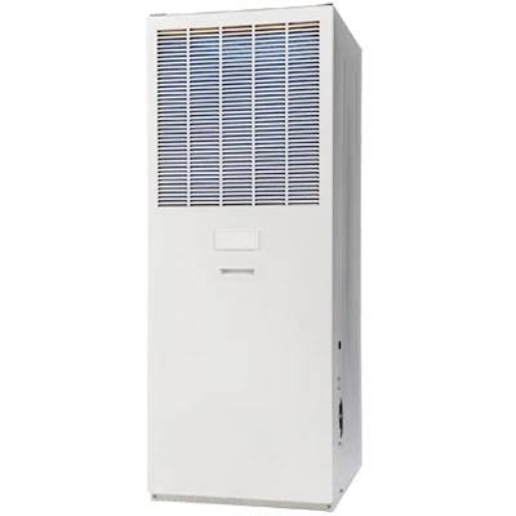
An electric furnace is not a bigger portable heater. It is a permanently installed system, and a licensed HVAC technician must install it. If the whole home needs heat, not just one room, a room heater will not be enough. The five models below are manufactured-home electric furnaces. Have your technician confirm the right size before you order.
Century E7EM-B010K1-CY: 10 kW Electric Furnace
|
Specification |
Details |
|---|---|
|
Electric heat |
10 kW |
|
Configuration |
Upflow/downflow |
|
Motor |
ECM constant torque |
|
Best for |
Smaller manufactured homes |
Shop the Century E7EM-B010K1-CY at Varouj Appliances →
Comfort-Aire EBE12B: 12 kW Electric Furnace
|
Specification |
Details |
|---|---|
|
Electric heat |
12 kW |
|
Output |
36,000 BTU/h |
|
Configuration |
Downflow, zero clearance, built-in coil cabinet |
|
Motor and airflow |
ECM, 1/2 HP, 5 speeds, 1,515 CFM |
|
Cooling |
A/C ready up to 4 tons |
|
Electrical and size |
208/230V, 70A fuse, cabinet 19.5 in. W x 24 in. D x 51.5 in. H |
|
Best for |
Installations where clearance is tight, thanks to the zero-clearance design |
Shop the Comfort-Aire EBE12B at Varouj Appliances →
Comfort-Aire E7EM-B015K1: 15 kW Electric Furnace
|
Specification |
Details |
|---|---|
|
Electric heat |
15 kW |
|
Configuration |
Upflow/downflow |
|
Motor |
ECM constant torque |
|
Best for |
Mid-size manufactured homes |
Shop the Comfort-Aire E7EM-B015K1 at Varouj Appliances →
Comfort-Aire E7EM-B020K1: 20 kW Electric Furnace
|
Specification |
Details |
|---|---|
|
Electric heat |
20 kW |
|
Configuration |
Upflow/downflow |
|
Motor |
ECM constant torque |
|
Best for |
Larger manufactured homes |
Shop the Comfort-Aire E7EM-B020K1 at Varouj Appliances →
Century E7EM-B023K1-CY: 23 kW Electric Furnace
|
Specification |
Details |
|---|---|
|
Electric heat |
23 kW |
|
Configuration |
Upflow/downflow |
|
Motor |
ECM constant torque |
|
Best for |
The highest output in this range |
Shop the Century E7EM-B023K1-CY at Varouj Appliances →
Why Buy from Varouj Appliances
- Electric furnaces: Comfort-Aire and Century models in a range of kW outputs.
- Professional delivery and installation: options are available across Los Angeles, Burbank, Glendale and Pasadena, and nationwide, depending on the product and location. Confirm availability when you order. Pricing is shown at checkout.
- Financing: 0% APR for 12 months on qualifying purchases.
- Highly rated: 4.8 on Google and 4.8 out of 5 on Shopper Approved.
- Support since 1989: call 1-888-440-5535 or use Chat Now on varouj.com.
Browse furnaces and heaters at Varouj Appliances →
Frequently Asked Questions
What size electric heater do I need for my room?
A common guideline from heating manufacturer Dimplex is about 10 watts per square foot for a normally insulated room, so a 100 sq. ft. room needs roughly 1,000 W. Poor insulation, large windows and drafts raise that figure. Check the rated output and coverage of the heater you choose.
What is the best electric heater for a small room?
For a bedroom or home office, pick a heater whose rated output suits the room, not the biggest one available. An oversized heater can overheat the space and use more energy than you need.
What is the difference between an electric heater and an electric furnace?
A portable electric heater plugs in and warms one room or area. An electric furnace is installed permanently, heats the home through a duct system and needs a licensed HVAC technician.
Is it safe to leave an electric heater on overnight?
Turn portable heaters off when you leave the room or go to sleep. Keep curtains, bedding and other combustibles clear of the unit, and follow the clearance guidance in the manual.
Can I plug an electric heater into an extension cord or power strip?
No. Plug it directly into a wall outlet instead. Check the outlet and circuit requirements in the manual before you use it.